Archaeological Constellation
ARCHAEOLOGICAL PARK OF SAN VICENTE HILL
The San Vicente Hill is located southwest of Salamanca's historic center, on the westernmost of the three hills on which the city was founded. Here lies the origin of Salamanca, a settlement occupied during the Early Iron Age, from the 8th to the 4th centuries BC. From that moment, population growth led to its relocation to the Teso de las Catedrales, giving rise to the Salmántica hillfort during the Late Iron Age.
After remaining uninhabited for centuries, the Benedictine Monastery of...
View details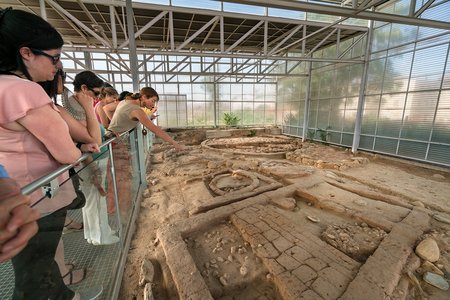
SLOPES OF CERRO DE SAN VICENTE
The municipal park known as Laderas del Cerro de San Vicente is located in the southwest of Salamanca's historic quarter, on the westernmost of the three hills where the primitive city was founded. This enclave houses the origin of Salamanca, a prehistoric settlement from the First Iron Age linked to the Meseta culture of Soto de Medinilla.
The area has been subject to various archaeological interventions, as well as landscaping and accessibility improvement works, which have allowed its...
View details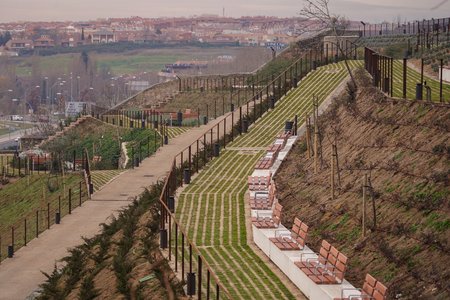
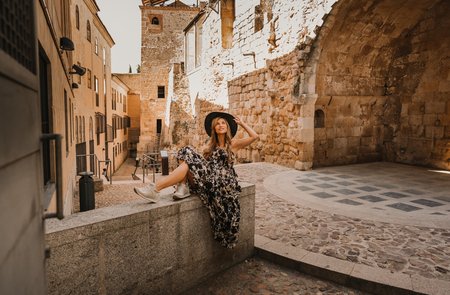
CUEVA DE SALAMANCA
The Cave of Salamanca is one of the city's most evocative corners, a place where history and legend have intertwined for centuries. In this corner, visitors discover the remains of the ancient medieval church of San Cebrián, whose crypt still preserves the mysterious atmosphere that has enveloped the place for centuries.
Next to it stands a section of the wall that protected the city in the Middle Ages and the Tower of the Marquis of Villena. This tower is closely linked to the famous legend...
BOTANICAL ARCHAEOLOGICAL PARK
The Botanical Archaeological Park is located in the historic center of Salamanca, on the southwestern edge of the Teso de las Catedrales. Archaeological excavations have documented an exceptional stratigraphy that traces the evolution of the city from the pre-Roman period (4th–1st centuries BC) to the splendor of the Golden Age, when this space was integrated into the religious and academic fabric with the presence of convents, colegios mayores (major colleges), and foundations linked to milit...
View details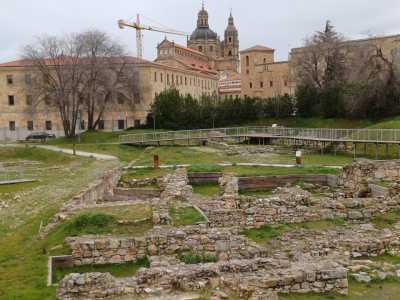
SALAMANCA WALLS INTERPRETATION CENTER
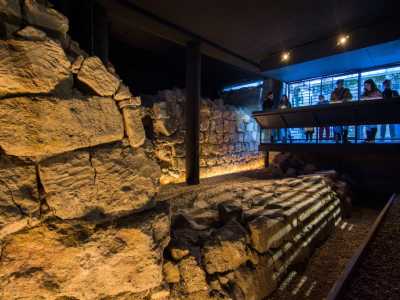
Salmantica Sedes Anticua Castrorum is an interpretation center where in situ remains of two of the defensive enclosures the city had are preserved: the wall from the protohistoric period (4th century BC) and the first medieval wall (12th century).
This space allows us to journey through the history and the warlike events in which the city was immersed throughout its long history. All these historical processes are explained through panels, audiovisuals, and interactive screens. The tour begin...
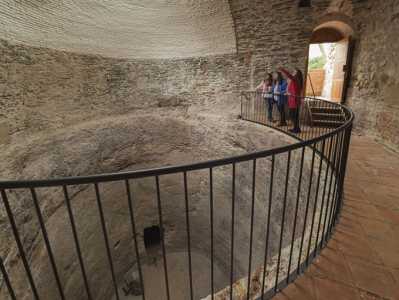
SNOW WELL
The remains that can be visited today in the space known as Pozo de Nieve (Snow Well) belonged to the ancient Convent of Discalced Carmelites of San Andrés, founded in the 16th century outside the walls of the San Pablo gate in Salamanca. That great monastic complex, which after its reconstruction in the 17th century came to be known as the Salamancan Escorial, was practically devastated by the San Policarpo flood in 1626 and finally disappeared definitively in the mid-19th century, due to the...
View details