Festivities and Traditions
Holy Week, of International Tourist Interest
The celebration of Holy Week in Salamanca is deeply rooted among the people of Salamanca, arousing a deep and intense religious fervor, a profound feeling that is also framed within the city's historic complex. The artistic richness of the imagery and the beautiful monumental setting through which the processions pass, merge in Holy Week with unique and singular brilliance.
Salamanca has 18 Confraternities, Congregations, and Brotherhoods that organize processions and events, the oldest being the Act of the Descent, the Procession of the Holy Burial, initiated in 1615, and the Procession of the Encounter, initiated in 1616. Holy Week in Salamanca was declared a Festival of International Tourist Interest in 2003.
Lunes de Aguas (Water Monday)
Festival of Tourist Interest in Castilla y León.
Lunes de Aguas is a popular festival celebrated on the Monday following Easter Monday.
Its origins date back to the 16th century, when public women, who lived in the Casa de Mancebía (House of Prostitution), were moved outside the city during Lent and Holy Week.
From Ash Wednesday onwards, they returned from their exile to the other side of the Tormes river with Padre Putas, a return celebrated with a great feast by the city's students.
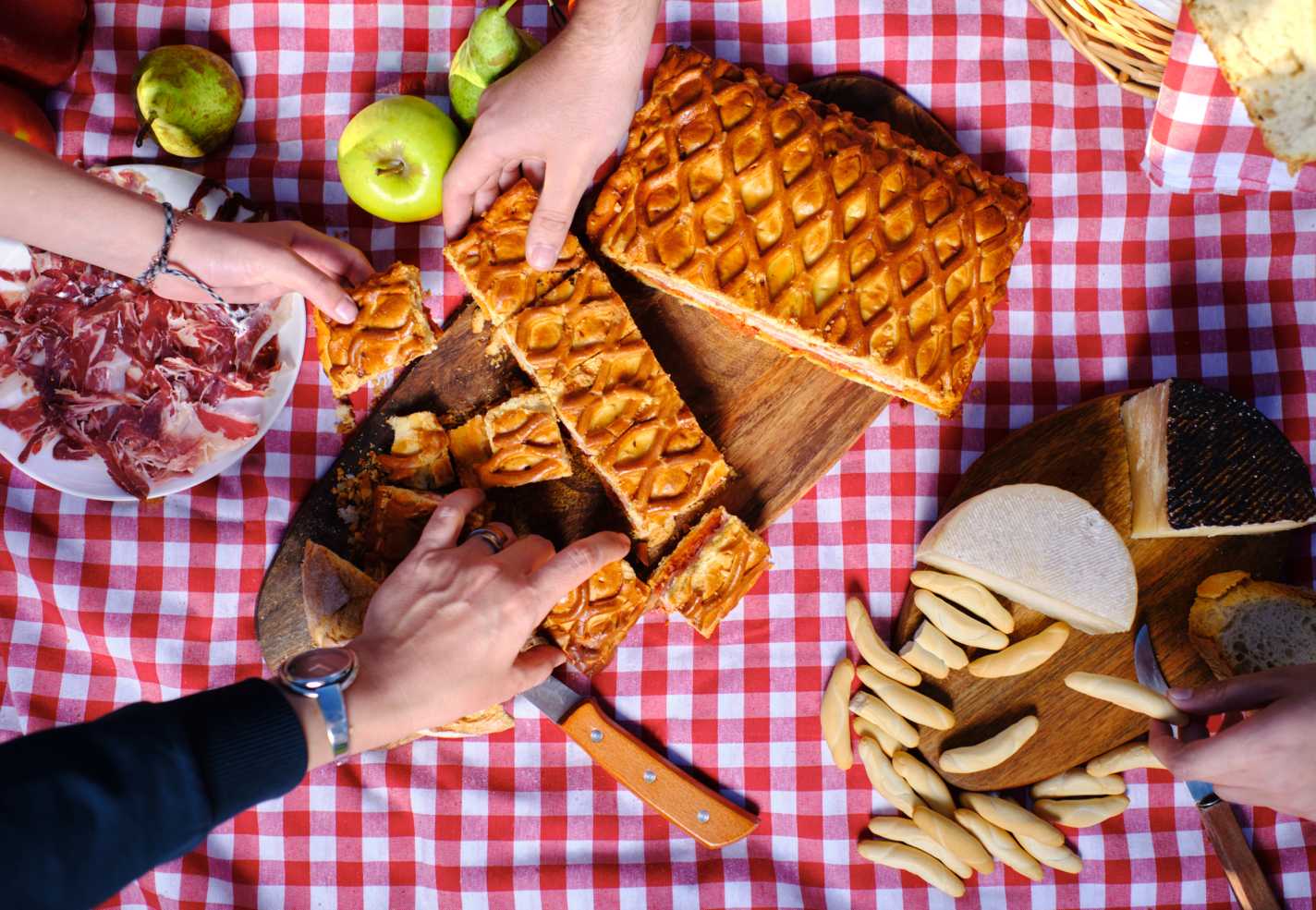
Today, the tradition of gathering with friends for a snack and going to the countryside to taste hornazo, a typical food made of bread dough filled with meat and cured sausages, is preserved.
On the occasion of the Lunes de Aguas celebration, in the days leading up to it, the city hosts a festival of music, dances, theatrical visits… in a celebration around the river.
June 12. San Juan de Sahagún
The city organizes a program of recreational activities in honor of its patron, San Juan de Sahagún. It includes fireworks, a folk festival, music, and sports.
September 7 to 15. Fairs and Festivals of Salamanca
The city's fairs and festivals begin with a floral offering to the Virgen de la Vega, who is carried in procession by groups of Salmantinos dressed in traditional costume.
Thus begins a grand week marked by concerts, street shows, attractions at the fairground, a medieval market, and fireworks.
September. Salamanca Bullfighting Fair
This is a fair with a great tradition, as this is a land where some of the best fighting bull ranches in Spain are located.
For several days, bullfights are offered with the main figures of bullfighting.
October 31 - Mariquelo's Ascent to the Cathedral Tower
Year after year, on All Saints' Eve, the Mariquelo performs the ascent to the cathedral's tower and weather vane, dressed in traditional costume and carrying his working instruments: the gaita (bagpipe) and tamboril (drum). An ascent to give thanks, which gives goosebumps when seeing him perched on the outside of the dome and hearing him play from the heights.
The tradition dates back to 1755. That year, an earthquake in Lisbon shook Salamanca, and many citizens fled their homes to take refuge in the newly built Cathedral. The temple remained standing, although some figures on its facade were shattered, and the tower was slightly tilted, a circumstance for which, in subsequent years, it has been reinforced for fear of its collapse.
The Cathedral Chapter established that every October 31 of the following years, a person would climb to the top of the temple to ring the bells and, incidentally, check that the tower was not continuing to tilt. The Mariquelos, a family who lived inside the cathedral and passed the mandate from parents to children, were in charge of starting this tradition.