Open-air Museum: Agustín Casillas
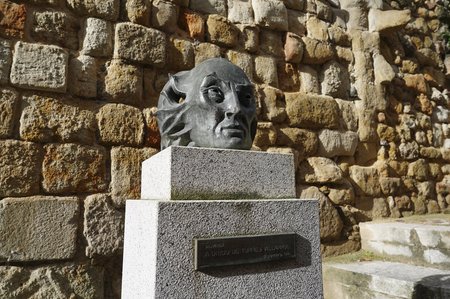
Lazarillo de Tormes and the Blind Man
This sculpture was commissioned by the Salamanca City Council, presided over by Pablo Beltrán de Heredia, in 1974. It was installed in September at the entrance to the Roman Bridge in an event that was a celebration with drummers, music, wine and hornazo throughout the Roman Bridge with the presence of residents from both sides of the Tormes, who promised to take care of it. It is made of bronze as its definitive material.
View details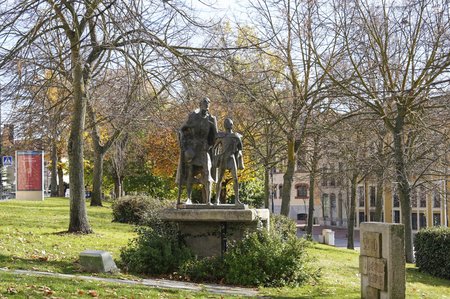
La Celestina and Calisto and Melibea
The council chaired by Jesús Málaga commissioned Agustín Casillas in 1976 to create a sculpture of La Celestina, a literary character closely linked to Salamanca. The work, which includes a relief of the lovers Calisto and Melibea, was initially installed on the Cuesta San Juan del Alcázar, near Peña Celestina, until its relocation to Arcediano street, at the entrance to the Garden of Calisto and Melibea.
View details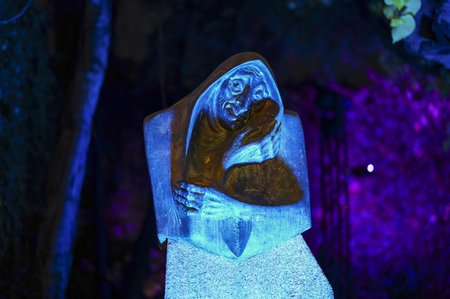
Prince Don Juan
Prince Don Juan, second son of the Catholic Monarchs, who at 19 years old came to take possession of the lordship of Salamanca with his wife Margarita, died in 1497 in the old Episcopal Palace of the city of Tormes, perhaps from tuberculosis, although there are opinions indicating that he died from lovesickness, a syphilis.
View details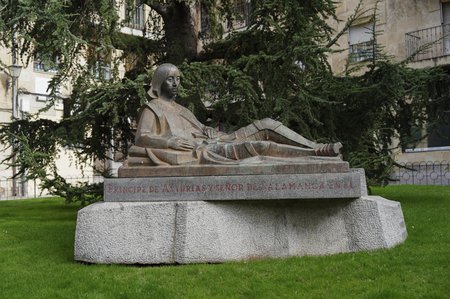
Boy with the Airplane
The Boy with the Airplane is Agustín Casillas's oldest sculpture preserved in a public space. It is located on the Carmelitas promenade next to a playground area where there are also fountains by the artist, since its installation in 1952. Made of stone and on a granite pedestal.
View details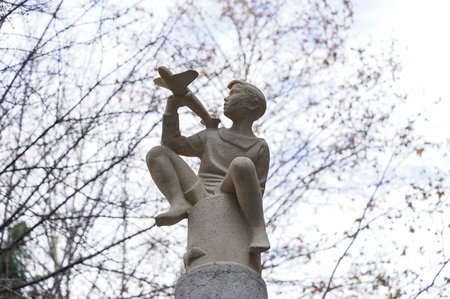
Naiad
Salamanca has two sculptures of the Naiad by Agustín Casillas. The original is located in the Plaza del Alto del Rollo (1972), a place close to his home and workplaces. This sculpture was in the Plaza de la Constitución where a bronze copy is located (2010)
View details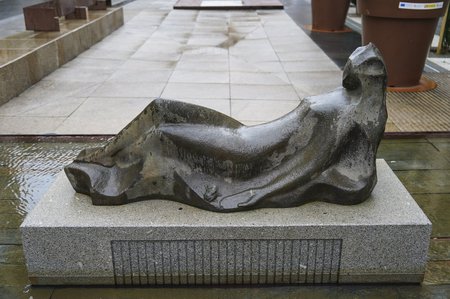
Pablo Ruiz Picasso
Sculpture from 1984. It is one of the first works with symbolism by the artist from Salamanca. An admirer of Picasso and his work, the sculptor depicts roosters in the manner of crow's feet to indicate the feisty character of the painter from Malaga. On the back, you can see the dove of peace and the Tree of Guernica that the painter depicted in his painting.
View details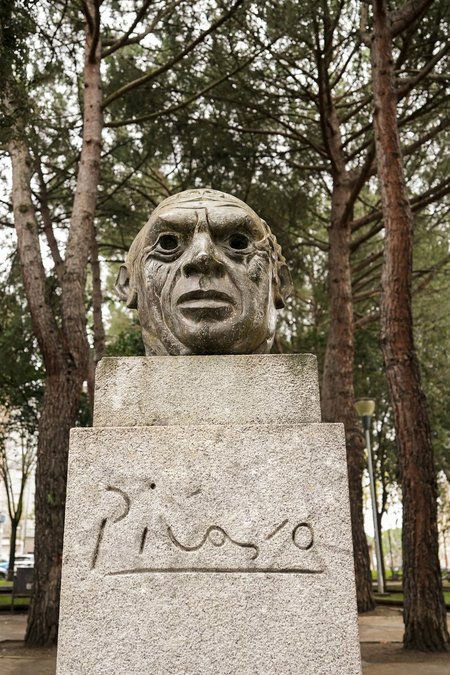
Rafael Farina
The City Council commissioned Agustín Casillas in 1996 to create a sculpture to honor the flamenco singer from Martinamor, the gypsy Rafael Farina. The bronze work is two meters high and is placed on a granite pedestal one and a half meters high. The sculpture, installed on November 21, 1996, is located on Sierpes Street, in the Vaguada de la Palma, in the old Barrio Chino, where Farina grew up. A tribute to a legendary voice.
View details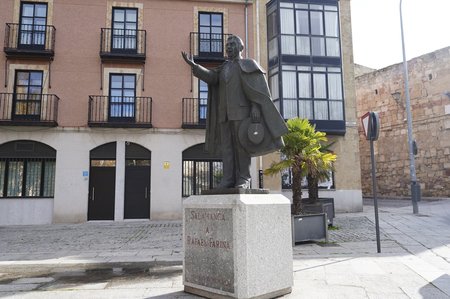
Abduction of Europa
The mythological character was the motif for one of the four sculptures commissioned by the City Council to Agustín Casillas in 1963. The Abduction of Europa, one of the two that remains standing, is made of white concrete and is located in La Alamedilla park.
View details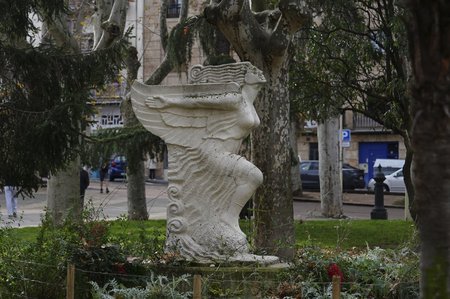
Reclining Woman
One of the four sculptures commissioned by the City Council to the artist Agustín Casillas from Salamanca in 1963. It represents a reclining woman drawing a key on the ground with her finger, indicating that she is the guardian of the park. It changed its location, as it was originally next to some gates that gave access to La Alamedilla park. It is made of patinated concrete.
View details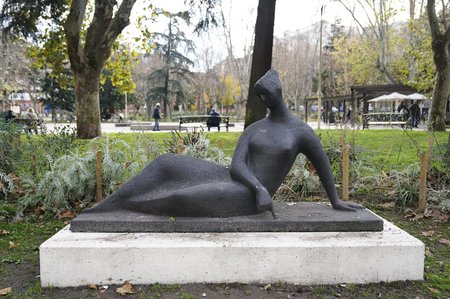
Diego de Torres y Villarroel
Bronze sculpture as the definitive material in 1993. It represents Diego de Torres y Villarroel, a writer, poet, playwright, physician, mathematician, priest, astronomer, bullfighter, and professor at the University of Salamanca. It is located in the remains of the legendary Cave of Salamanca, a place where, according to tradition, the devil taught classes, in the crypt of the disappeared church of San Cebrián.
View details